~~
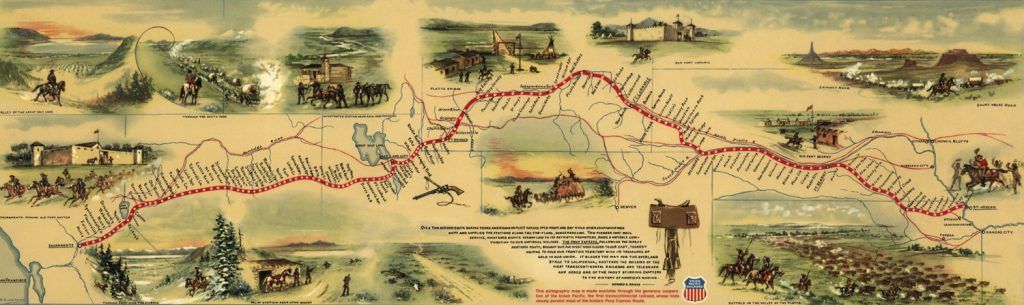
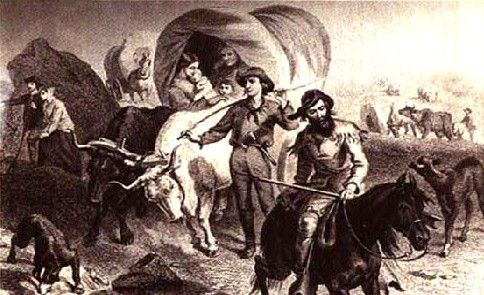
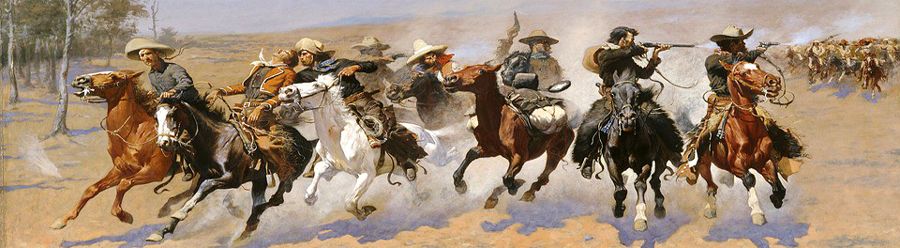
From St. Joseph, Missouri, to Sacramento, California, the first successful Pony Express run took place on April 3, 1860. A lone rider on a bay mare galloped from Pike’s Peak Stables in St. Joseph, Missouri, thus inaugurating the famous Pony Express. Saddle up and read more here.
~~
Did You Know?
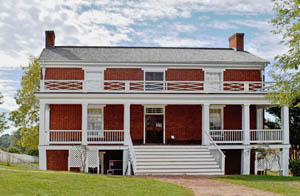
McLean House in Appomattox, Virginia by Kathy Alexander.
Appomattox Court House National Historical Park in south-central Virginia commemorates the surrender of Confederate General Robert E. Lee’s Army of Northern Virginia to Union Lieutenant General Ulysses S. Grant on April 9, 1865. Continue Reading…
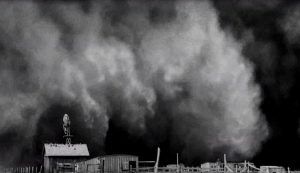
Black Sunday, April 14, 1935, during the Dust Bowl Days.
The Dust Bowl of the 1930s, sometimes called the “Dirty Thirties,” lasted about a decade. This period of severe dust storms caused major agricultural damage to American and Canadian prairie lands, primarily from 1930 to 1936, but in some areas, until 1940. Read more…
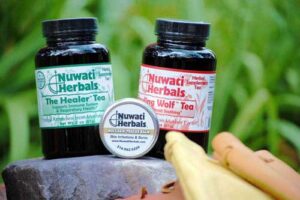
Nuwati Herbals are available at Legends’ General Store
We want to clear out some of our overstocked Nuwati Herbal inventory, so we are passing along some of our biggest discounts ever at Legends’ General Store. Save 30% off in-stock Nuwati merchandise when you use coupon code NU30. Save on Balms, Smoke Mix, Soaps, and, of course, TEAS!
Our everyday 10% automatic discount on teas still applies, so on Tea orders, you could save 40% when you use coupon code NU30 in cart view!!
Offer extended through April 30, 2024, on in-stock merchandise from Nuwati Herbals.
Shop Now!
~~
Happy Birthday!
~~
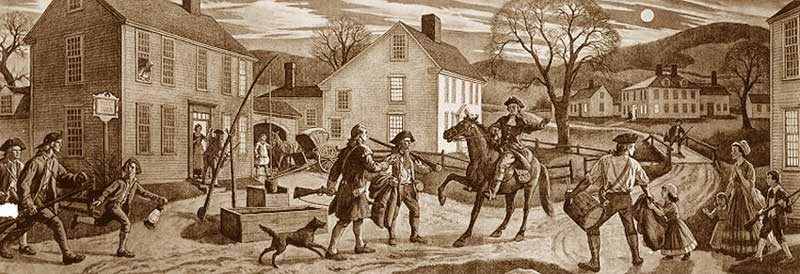
Paul Revere is an American folk hero of the American Revolution whose dramatic horseback ride on the night of April 18, 1775, warned Boston area residents that the British were coming. Read more about this American Legend…
~~
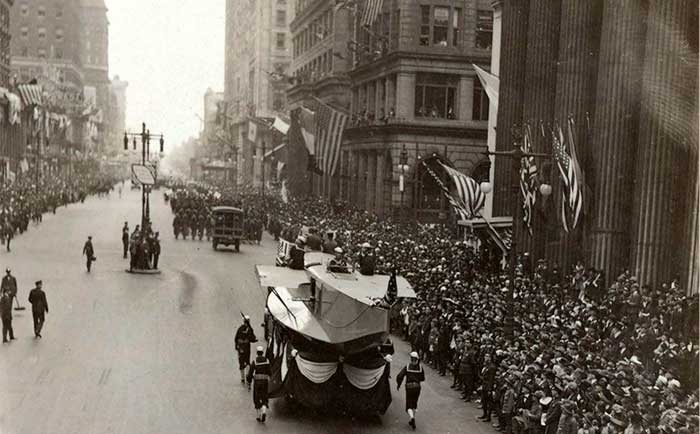
The city is known for its extensive contributions to United States history, especially during the American Revolution. It served as the nation’s capital until 1800 and maintained contemporary influence in business, industry, culture, sports, and music. Read about Philadelphia, Pennsylvania – Independence Begins.
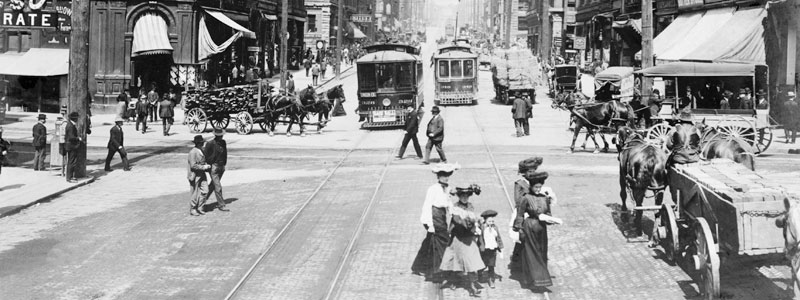
People on a Seattle, Washington Street, 1904.
~~
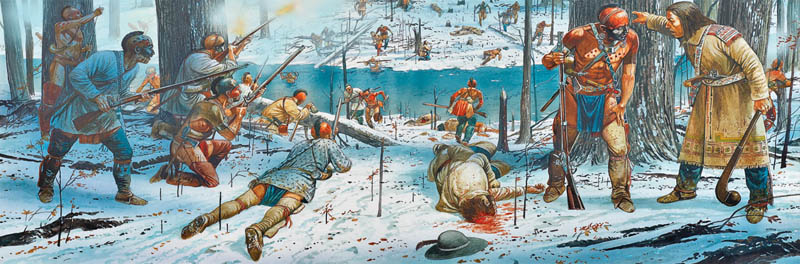
St. Clairs Defeat
St. Clair’s defeat, also known as the Battle of the Wabash or the Battle of a Thousand Slain, was fought on November 4, 1791, in the Old Northwest Territory in present-day Ohio. When the U.S. Army faced the Western Confederacy of Native Americans during the Northwest Indian War, it suffered “the most decisive defeat in the history of the American military” and its largest defeat ever by Native Americans. Read more…
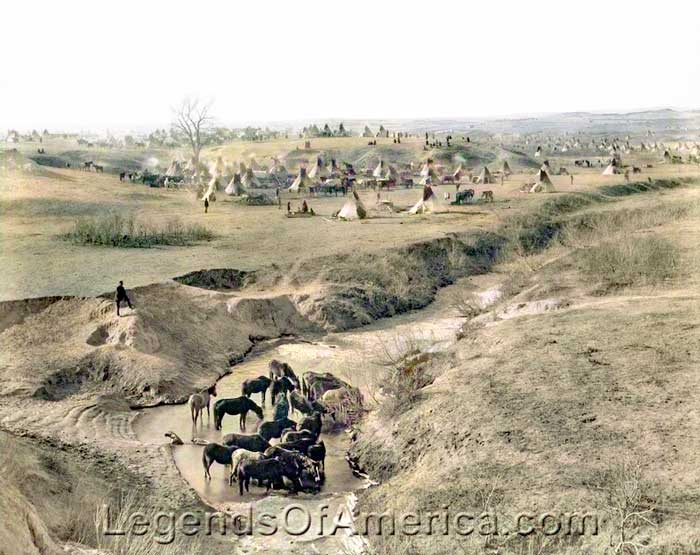
“Villa of Brule” by John C. H. Grabill, captures a Lakota tipi camp near Pine Ridge, South Dakota in 1891, complete with horses at White Clay Creek watering hole. Touch of color by LOA.
~~
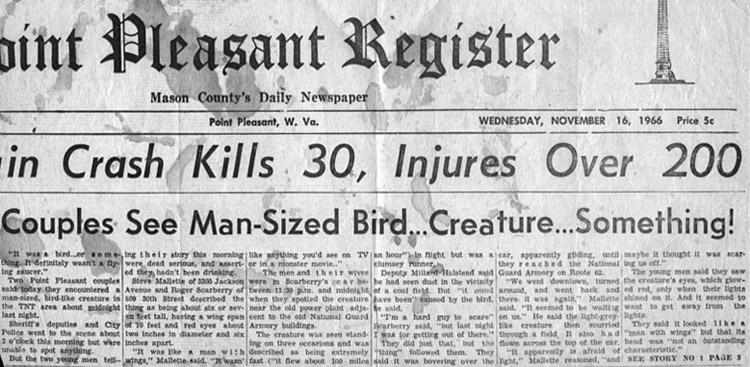
In Point Pleasant, West Virginia, a large humanoid creature called the Mothman was sighted decades ago by two young couples who fled the dark woods in terror. Pull up the blanket for the tale of the Mothman of West Virginia here…
~~
~~
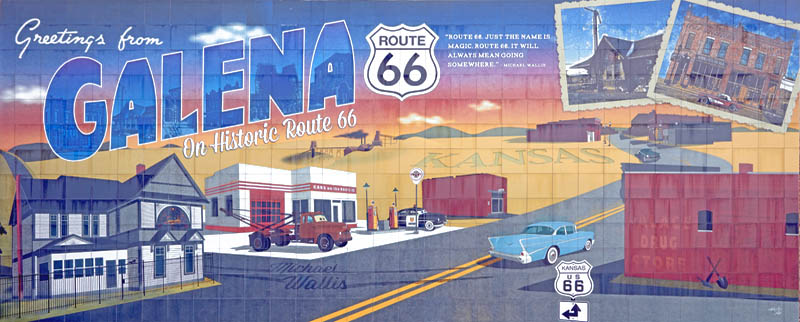
Galena, Kansas Mural by Carol Highsmith.
Galena is called home to about 3,000 people today and provides peeks at several historic buildings, including vintage examples of the Mother Road and architecture from this historic city’s booming cattle and mining days. See the Route 66 Town of Galena, Kansas.
~~
Hey, Y’all!

Dave & Kathy Alexander at the Glory Hole in Dogwood Canyon Nature Park, Missouri.
Legends of America is comprised of just the two of us — Dave & Kathy, who have a love of history, and travel and a desire to share it with the world! Several others have contributed along the way and we always welcome more.
Though we are a small Mom & Pop “shop,” we have decades of customer service & business experience between the two of us — in both large and small organizations. With an entrepreneurial dream, we launched Legends of America in 2003.
We are Midwest-born and bred with great values. With just an email, phone call, or order, you’ll find that our customer service is Over the Top!!
Legends’ General Store, our Photo Print Shop, and our great advertisers are the primary means for providing volumes of information to our readers at no cost.
Here’s some TMI on About Us